
Creating content is exhausting. You spend hours brainstorming, writing, filming, editing, and publishing. Then you post it once, get some engagement, and move on to creating something entirely new from scratch.
So yeah, that’s a waste of time.
Content repurposing isn't about being lazy or recycling old material because you're out of ideas. It's about being strategic and productive. You've already done the hard work of creating something valuable. Why not extract every ounce of value from it?
Most of your audience didn't see your content the first time. Different people consume content on different platforms. Some love long-form blog posts. Others want quick Instagram carousels. Some prefer video, others want audio.
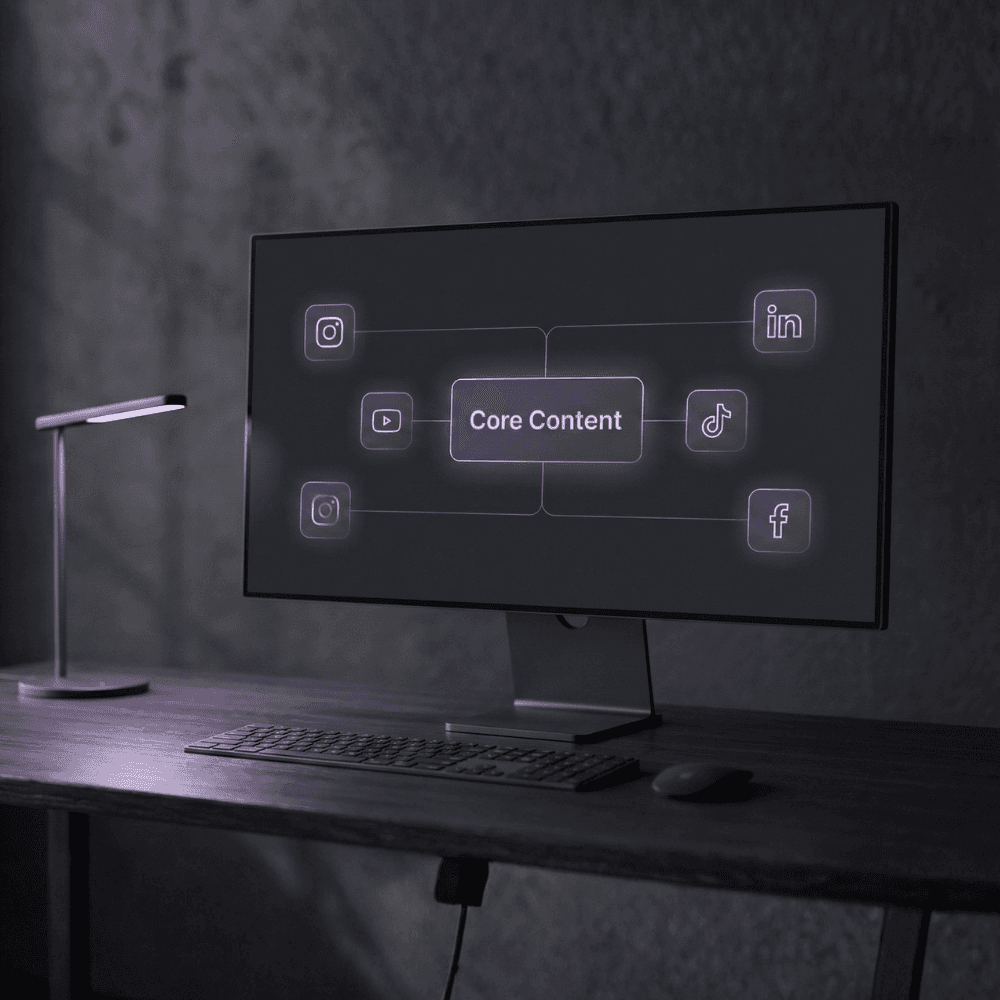
One piece of content can become five (or more) different assets that reach completely different audiences. Here's exactly how to do it.
Start with One Strong Pillar Piece
The key to successful repurposing is starting with substantial content. You can't repurpose a Tweet into five things. But you can absolutely repurpose a podcast episode, a long-form blog post, a YouTube video, or a detailed guide.
Your pillar content should be:
Valuable - It teaches something, solves a problem, or provides insights people actually care about.
Evergreen - Avoid time-sensitive content. "5 Instagram trends for March 2024" has a short shelf life. "How to write Instagram captions that convert" works for years.
Detailed - It needs enough depth to extract multiple angles from. A 200-word post won't give you much. A 1,500-word article or 20-minute video? Plenty to work with.
Let's say you've written a blog post about Instagram growth strategies. That's your pillar. Now let's break it into five different content pieces.
Piece #1: Instagram Carousel Post
Pull out the main framework or steps from your pillar content and turn it into a carousel post.
If your blog post covered "5 ways to grow on Instagram," each slide becomes one strategy. Keep it visual, easy to scan, and actionable.
Slide 1: Eye-catching title slide. "5 Ways to Actually Grow on Instagram (That Still Work in 2025)"
Slides 2-6: One strategy per slide with a quick explanation and visual element.
Slide 7: Recap or call-to-action. "Save this for later" or "Which strategy will you try first?"
Carousels get higher engagement than single images because people swipe through them, which signals to Instagram that the content is valuable. Plus, they're highly saveable, which extends their reach.
Design tip: Use templates and keep your brand colors consistent. You don't need to be a designer. Clean, simple slides with readable text outperform overcomplicated graphics.
Piece #2: Short-Form Video (Reel/TikTok/YouTube Short)
Take one specific point from your pillar content and turn it into a 30-60 second video.
If your blog mentioned "using Stories to boost engagement," create a quick Reel showing exactly how to do it. Show your screen, demonstrate the process, add text overlays explaining each step.
Short-form video should be:
Fast-paced - Cut out the fluff. Get to the point in the first 3 seconds.
Visual - Show, don't just tell. Screen recordings, B-roll, examples.
Valuable - Give one complete tip they can actually use, not a teaser that requires them to go elsewhere.
Hook examples:
"Stop posting on Instagram without doing this first"
"Your Instagram Stories are boring. Here's why"
"This Instagram feature got me 1,000 followers in 30 days"
You can create 3-5 different Reels from one blog post by pulling different tips or sections. Each one targets a slightly different angle of the same topic.
Piece #3: Email Newsletter
Your email subscribers are your most engaged audience. They've literally given you permission to show up in their inbox. Don't waste that.
Turn your pillar content into a newsletter by:
Summarizing the key points - Don't copy-paste the entire blog. Give them the highlights with your personal take.
Adding context - Share why this topic matters, a personal story, or an update on how you've implemented these strategies yourself.
Including a clear call-to-action - Link to the full blog post, ask a question to encourage replies, or promote a related resource.
Email allows for a more personal, conversational tone. You're talking directly to one person, not broadcasting to the masses. Use that to your advantage.
Example subject lines:
"The Instagram strategy nobody's talking about"
"I tested 5 growth tactics. Here's what actually worked"
"Quick question about your Instagram strategy"
Piece #4: LinkedIn Post or Article
LinkedIn audiences consume content differently than Instagram or TikTok. They want professional insights, data, and strategic thinking.
Take your pillar content and reframe it for a business audience:
Lead with data or results - "After analyzing 200 Instagram accounts, here's what the fastest-growing profiles do differently."
Focus on strategy over tactics - LinkedIn users want to understand the why, not just the how.
Share lessons learned - Personal experiences and case studies perform well. "We tried this approach with 10 clients. Here's what happened."
You can also turn your blog post into a LinkedIn article (longer-form content published directly on LinkedIn). This positions you as a thought leader and keeps people on the platform longer, which LinkedIn's algorithm loves.
Piece #5: Twitter/X Thread
Twitter thrives on concise, punchy insights. Turn your pillar content into a thread that breaks down the main points into bite-sized tweets.
Tweet 1: Hook them. "Most people are wasting time on Instagram. Here's what to do instead:"
Tweets 2-8: One insight per tweet. Keep each tweet valuable on its own.
Final tweet: Call-to-action. "If you found this helpful, follow me for more marketing tips" or "Full breakdown in my latest blog post [link]"
Threads perform well because they encourage engagement (replies, retweets) and keep people on your profile longer as they read through.
Bonus: You can screenshot your thread and post it as a carousel on Instagram. That's repurposing your repurposed content. 🎯
The Actual Workflow (Step-by-Step)
Here's how to systemize this so it doesn't feel overwhelming:
Step 1: Create your pillar content. Write the blog post, record the podcast, film the YouTube video. Whatever format you're most comfortable with.
Step 2: Immediately plan your repurposing. Don't wait weeks. While the content is fresh, identify which sections work for which platforms.
Step 3: Batch create. Set aside 2-3 hours to create all five repurposed pieces at once. It's more efficient than spreading it out.
Step 4: Schedule strategically. Don't post everything the same day. Spread it out over 1-2 weeks to maximize reach without overwhelming your audience.
Step 5: Track what performs. Pay attention to which repurposed formats get the best engagement. Double down on what works.
Platform-Specific Tips
Instagram: Carousels and Reels perform best. Stories for behind-the-scenes or quick tips.
LinkedIn: Professional tone, data-driven, strategic insights. Articles and text posts both work.
TikTok: Fast, entertaining, educational. Hook them in 1 second or they scroll.
Twitter: Threads and quick insights. Be concise and conversational.
Email: Personal, valuable, direct. Don't over-promote.
Common Mistakes to Avoid
Don't just copy-paste. Each platform has its own language and audience expectations. Adapt your message accordingly.
Don't apologize for repurposing. Your Instagram audience isn't reading your blog. Your email subscribers aren't watching your TikToks. It's new to them.
Don't sacrifice quality for quantity. Five mediocre pieces won't perform better than one great piece and three good ones. If something doesn't add value, skip it.
Don't forget to update. If you're repurposing older content, make sure the information is still accurate and relevant.
Why This Actually Matters
Content repurposing works for meeting your audience where they are.
Some people will discover you on Instagram. Others on LinkedIn. Some prefer reading, others watching videos. By repurposing one piece of content across multiple formats and platforms, you're increasing your chances of reaching the right person in the right place at the right time.
Plus, it saves you countless hours. Instead of creating 20 original pieces of content per month, you create 4 pillar pieces and repurpose each one into 5 assets. That's 20 pieces of content from 4 core ideas.
Work smarter, not harder.
Start Small
If this feels overwhelming, start with one pillar piece and repurpose it into just two formats. Blog post + Instagram carousel. YouTube video + email newsletter. Whatever feels manageable.
As you get comfortable with the workflow, expand. Eventually, repurposing becomes second nature. You'll create pillar content with repurposing in mind from the start.
The content you've already created has more life in it than you think. Stop letting it die after one post. Extract the value, reach more people, and make your effort count.